[Training Video] Industrial Safety Training Videos: What to Show and Track
A good industrial safety training video covers one task and shows four things without gaps: the hazard points, the protective equipment, the step order, and the situations where work must stop. Keep videos short so workers can watch again right before a task, and provide versions in the languages your workers speak. Finally, keep a record of who watched and when, so you can confirm the training actually happened.
When does Korean law require safety training?
For readers working with sites in Korea: Article 29 of Korea's Occupational Safety and Health Act requires employers to provide safety and health training to their workers on a regular basis. It also requires training needed for the job when a worker is hired and when their work changes, with additional training for hazardous work. Hours and methods are set by Ministry of Employment and Labor ordinances and notices, so if you want video training to count toward legally required hours, check those rules first. Requirements differ by country, so outside Korea, follow your local regulations.
For foreign workers, Article 31-2 (basic safety and health training for foreign workers) was added to the same Act on July 7, 2026 and takes effect on January 8, 2027. It requires completing training run by the Korea Occupational Safety and Health Agency or an institution designated by ministry ordinance, so it is different from videos a company makes itself. Basic training aside, the equipment and step order at each site can only be taught at that site. That is where task-specific safety videos come in.
What must the video show?
For each task, we write the script against a four-point checklist.
- Hazard points · Pinch points, entanglement, electric shock, falls, chemicals. Mark on screen exactly where someone can get hurt in this task. Do not just say "be careful". Show precisely where hands must never go.
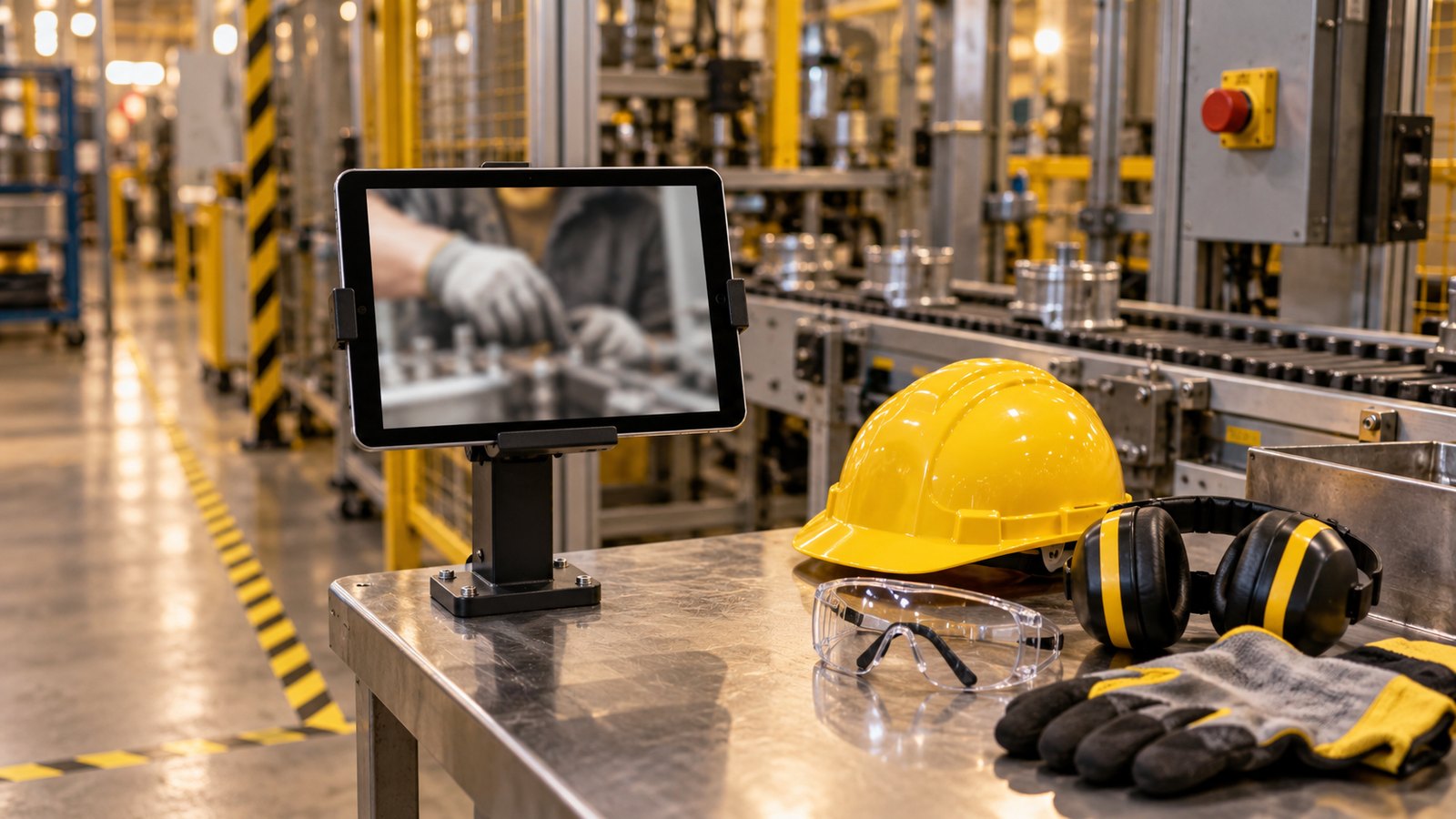
- Protective equipment · Show only what this task needs, such as a hard hat, safety glasses, gloves or ear protection, and show it worn correctly.
- Step order · Number the sequence: power off and lock out, verify, work, restore. One action per scene.
- Stop rules · Show specific situations where work stops at once and a supervisor is called: an unusual noise, a warning light, an open guard.
The fourth point is the one most often missing. A video that only shows the normal sequence does not help when something unexpected happens. Giving "when not to proceed" its own scene reduces the moments where a new worker has to decide alone.
Why split safety videos into short pieces?
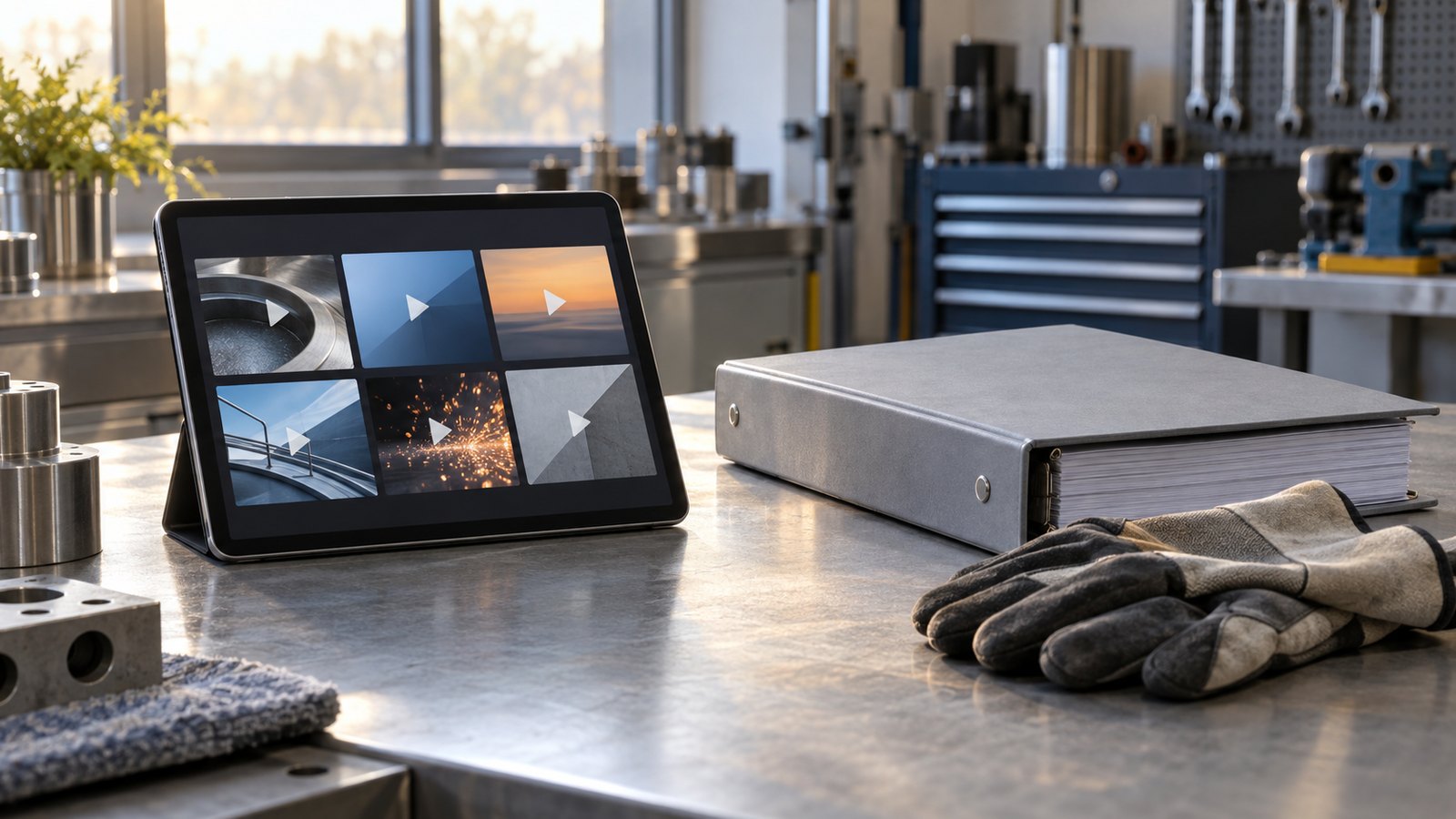
Safety training is not watched once and forgotten. Infrequent inspections and occasional maintenance need a quick check right before the work. If the content sits inside one 30-minute video, people give up looking for the part they need. One task per video, a few minutes each, means workers can find it on a site tablet or phone in seconds. We explain how to set video length in how long a training video should be.
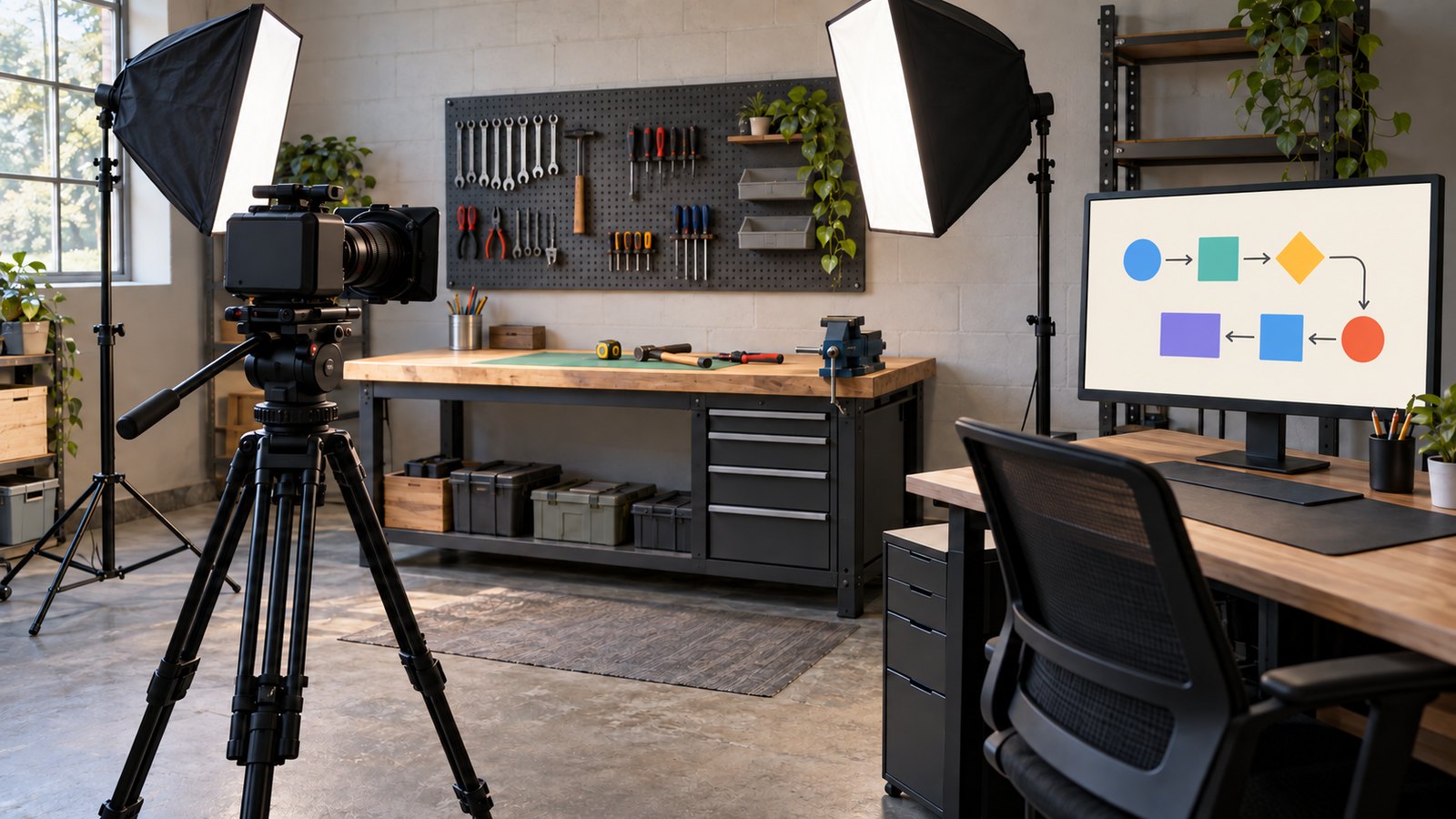
When the hazard is inside equipment and hard to film, or filming itself would be unsafe, graphics work better. When the real look matters, such as hand position or how protective gear is worn, filming on site is more effective. We compare the two in our guide on filmed versus motion-graphic manual videos.
How do you reach workers who speak other languages?
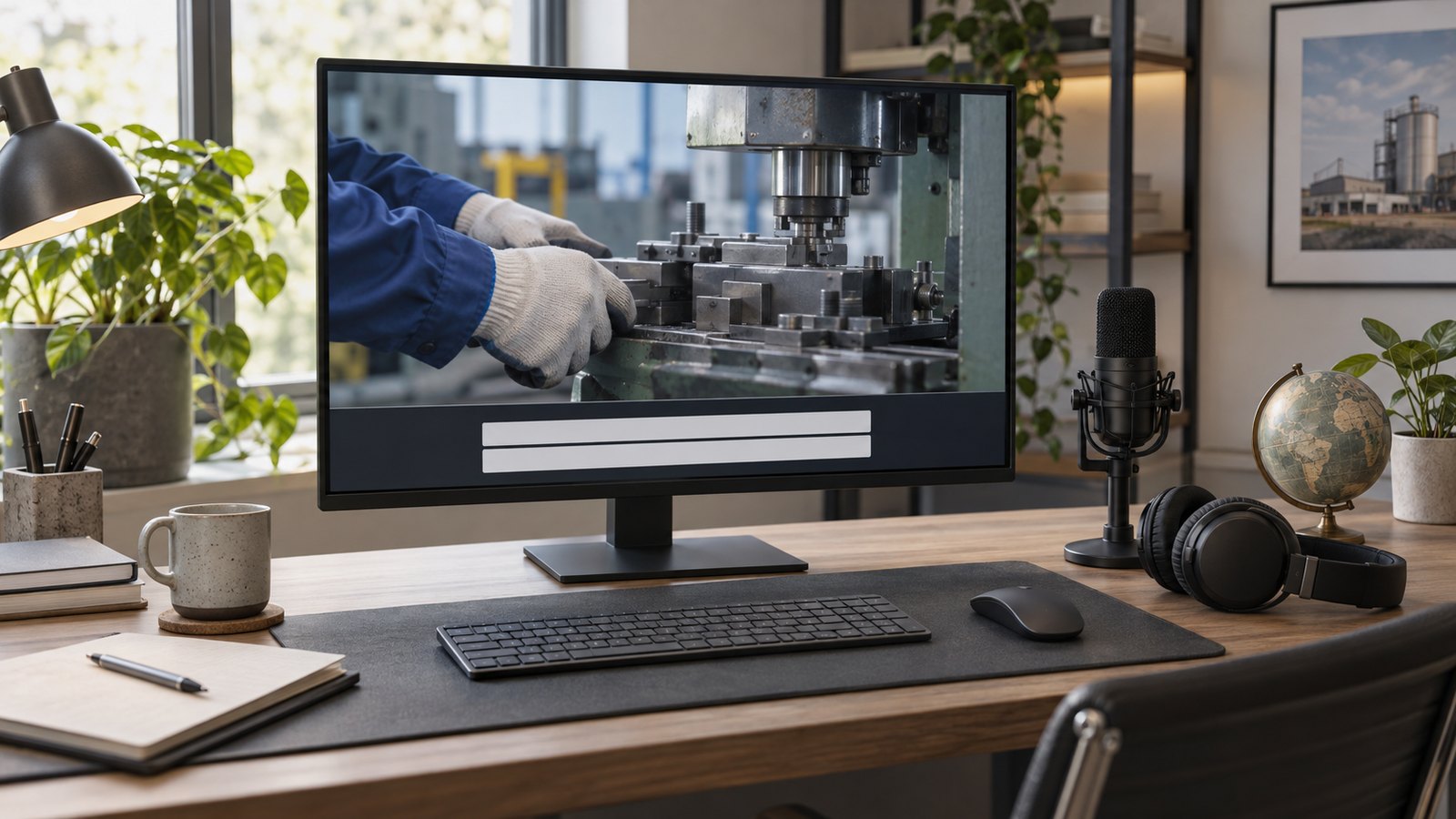
Start by making the video understandable without words. Show hazards with color and markers and steps with numbers and actions, and the flow can be followed even without narration. Then add dubbing or subtitles in the workers' languages. Warning phrases and stop rules in particular should be checked by a native speaker to confirm they match what people actually say on site.
We have produced 40 manual videos with Chinese subtitles and dubbing to train local workers at Hyundai Robotics' subsidiary in China. When making several language versions, the order matters: lock the source script, build a terminology list, then translate. The full sequence is in our guide to localizing manual videos with dubbing and subtitles.
How do you record who has watched?
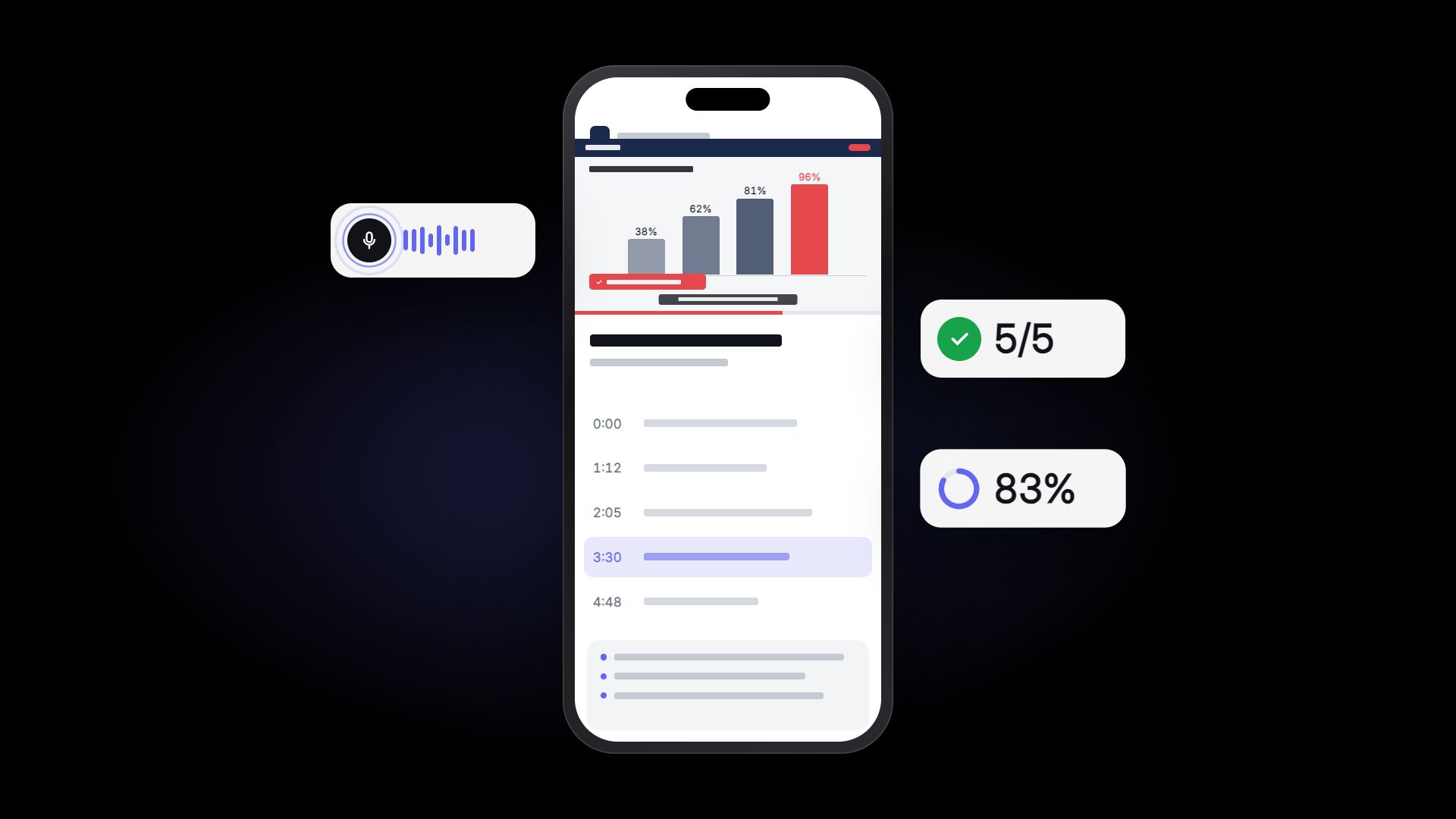
If you share a video link in a group chat, you cannot tell who watched to the end. If you need training records, host the videos on a training site (LMS) that keeps each worker's viewing progress and quiz results. Quizzes do not need to be hard. Questions that ask the stop rules directly, such as "what do you switch off before this task?" or "what do you do when this warning light comes on?", work well.
You can see how viewing progress, chapter navigation, subtitles and quizzes look on a training site in our training site demo. When a company needs its own training site is covered in what an LMS is and when you need one, and the full production process is on our training video and LMS page.
FAQ
Can a company-made safety video replace legally required training?
It depends on the rules where your site operates. In Korea, hours, methods and recognition criteria are set by Ministry of Employment and Labor ordinances and notices. Check with your safety manager or the relevant authority first, then build the videos to meet those requirements.
How do you show the inside of dangerous equipment?
Where filming is difficult or unsafe, 3D or motion graphics can show the internal structure and hazard points, mixed with real work actions filmed under safe conditions.
How many languages can the videos be made in?
Once the source script and terminology list are locked, there is no limit on the number of languages. Start with the languages your workers actually speak, and have each version reviewed by a native speaker.
If you are planning task-specific safety training videos, send us your task list or existing safety material through our contact page. We work with clients outside Korea and reply in English.