[Production Q&A] How Many Review Rounds Does a Manual Video Need?
A manual video is usually reviewed at three points: the script, the draft cut and the final version. When one person gathers all comments and sends them at once, each stage often closes with one round of changes and a short confirmation. Revisions multiply because of order, not number. When questions that belong to the script are raised on the finished video, every fix costs more.
At which stages, and how many times, do we review?
The first review is the script. It is a document with the narration and a description of each scene. Check that the procedure is correct, that no step is missing and that the terms match what people say on the floor. Most content errors in a manual video can be caught here.
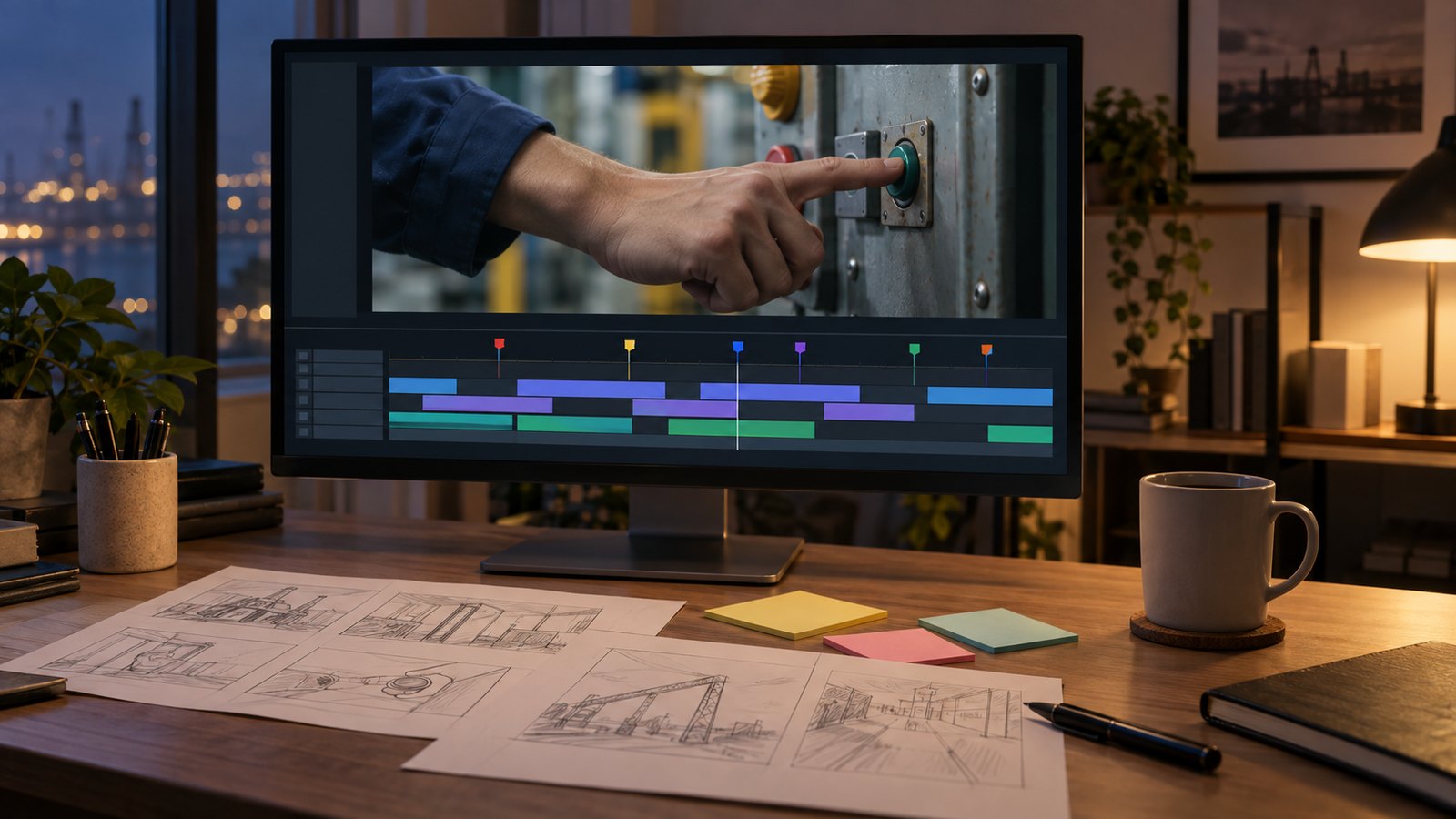
The second is the draft cut. Narration and picture come together for the first time, so check the order of scenes and whether what is on screen matches what is said. For filmed footage, check that hand movements and indicator lights are clearly visible. For motion graphics, check that arrows and highlights point to the right place.
The third is the final version. Check finishing details: subtitle typos, figures and units, logos and naming, audio levels. The aim at this stage is to correct mistakes, not to change content. Agreeing the number of revision rounds per stage in the contract makes the schedule predictable for both sides.
Who should review at each stage?
The script should be reviewed by someone who actually does the task. The person who uses the machine or system every day knows the missing steps and floor vocabulary better than whoever wrote the document. If safety or regulatory content is involved, get that department's sign-off at this stage too.
The draft cut works best when the subject expert and the training lead watch it together. The expert checks that the actions on screen are correct. The training lead checks whether a first-time viewer can follow the pace and order. The final version is confirmed and approved by the single point of contact who gathers feedback. If a senior manager has the last word, show them the draft cut before the final. When someone sees the video for the first time at the end and changes direction, earlier stages have to be redone.
How should feedback be written so fixes are fast?
Use timecodes. A line such as "1:24, button name is wrong, it should be Run, not Start" gives the location, the problem and the fix, and leaves nothing to interpret. Broad comments such as "make it brighter overall" become precise when you point to one example scene.
Have one person collect comments and send them together. When several people email separately, the same scene can receive conflicting requests. If your point of contact puts timecode, scene, comment and requester into one spreadsheet and resolves conflicts before sending, the stage is far more likely to close in one round. At the script stage, tracked changes directly in the document work well too.
Why do revisions pile up?
The most common reason is a script that was not checked closely enough. A script is just text, so it is easy to skim, but once the video exists, changing one sentence changes the narration, subtitles and picture together. Branches in a task also need to be settled in the script. One of our own sample manuals, on registering an organization administrator in Korea's national subsidy management system, covers two routes: applying without attachments, and applying with three scanned documents. Deciding which routes to include at the video stage would reshape the scene structure.
The other reason is review time. The shorter the schedule, the shorter each review window, so reviewers need to block time in advance. Our public hearing video for the 2040 Daegu Urban Master Plan, made with Daegu Metropolitan City, turned a 40-page slide deck into motion graphics on a ten-day schedule. The tighter the schedule, the more important it is to decide at the start who reviews what and when. The full process is on our training video and LMS page, and the materials to gather before ordering are in what to prepare before ordering manual videos. Our work is in the portfolio.
FAQ
Can content change after the final version?
Yes. Content changes at the final stage mean narration, subtitles and picture all have to be realigned, so they take longer than changes made earlier. If you know some content may change, tell us at the script stage and we will build those parts so they are easy to update.
How long should each review window be?
It depends on video length and the number of reviewers, so we set it per stage in the contract. What matters more than the length is whether reviewers can actually make time during that window.
Do we review every stage when making a series of videos?
Yes. It helps to take the first video through all three stages and lock it, then use it as the template for the rest. Tone of voice, subtitle position and screen layout agreed on the first video become the standard for the others, which reduces revisions across the series.
If you are working out review stages and owners for a manual video project, tell us about it through our contact page. We work with clients outside Korea and reply in English, and we will start by suggesting a review plan that fits your team.